
Volume 5 Issue 2
By Ruoyan Zhu, Hong Kong Baptist University
Citation
Zhu, R. 2026. Rewilding and complex human-nature relationship in cities: Ecological parks in Chengdu, China. Routes, 5(2): 75-86.
Abstract
Rewilding has been a contested idea in cities, given that the urban ecosystem is highly fragmented and human intervened. Despite the reluctance to apply rewilding in cities, is it possible? With that in mind, this photo essay will explore the possibility of rewilding in cities, especially in parks. The author visited two major parks in Chengdu, China, including Jincheng Park and Qinglong Lake Wetland Park, aiming to catch signs of rewilding in cities and reflect human-nature interactions in the urban setting.
1. Introduction
The large scale of human activities has caused accelerating biodiversity loss and ecosystem degradation. A growing number of scholars advocate the need for process-oriented approaches to restore our ecosystem (Perino et al., 2019). Rewilding is one of them. This strategy aims to restore self-sustaining ecosystems, acknowledging complexity and autonomy as inherent characteristics of nature. Despite the popularity of the idea, rewilding has been contested in cities, given that the urban ecosystem is highly fragmented and human intervened (Pettorelli et al., 2022). However, Carver et al. (2021) indicate that rewilding is compatible with human participation and highlight the role of human management that helps the environment transition. This gives the possibility to discuss rewilding in the urban context. As rewilding is always manifested in environmental phenomena and can be best captured in photos, the author chose a photo essay to demonstrate revilding in a city, exploring the possibility of and nuanced situations of rewilding in cities.
Chengdu, located in the southwestern part of China, is one of the biggest cities in the country, with more than 20.93 million permanent residents, ranking fourth among all cities in China (only after Chongqing, Shanghai, and Beijing). It is unique because it is the first city in China to announce the construction of ‘City of Parks’, which makes it a pilot spot for other cities to follow. Parks, as one of the formal green spaces in cities, have relatively easy-to-find wild nature areas (Zoderer et al., 2024). In January 2022, Chengdu declared the full completion of the “Round City Ecological Park”, a project to surround the city with green areas by linking multiple ecological parks. The author visited two parks on the list: Jincheng Park and Qinglong Lake Wetland Park. The following essay will start with a literature review that reveals the complicated relationship between people and nature in cities. Then, it will take readers on a journey through these parks, connecting theoretical background with reality in China.
2. Literature review
For a long time, the concept of wilderness has been ever-changing. Wilderness has evolved from meaning deserted and wasted three hundred years ago to a beauty that a growing number of citizens want to visit, evidenced by the establishment of national parks (Cronon, 1996). The variation of the concept also means that there will be, in turn, a complex relationship between wilderness and humans, with some acknowledgement that the making of nature does not mean the elimination of humans, including the emergence of concepts such as peopled landscape (Atchison et al., 2024; Cronon, 1996). With the rapid and large-scale urbanization in the most recent century, one of the heated discussions is about such a relationship in cities. The attempt to theorize urban space as an integrated kind of socio-ecological system emerges in the early decades of the twentieth century (Frank et al., 2017). In more recent years, urban rewilding has become a widely used response to environmental problems in the urban system that recognizes the long history of anthropogenic land use and thus the social dimension of rewilding (Atchison et al., 2024). In short, urban rewilding entails the restoration of ecological processes at scale as well as forging new modes of environmental citizenship (Turnbull et al., 2025). A characteristic of urban ecology is a high degree of fragmentation. Therefore, forging relations between fragments and building urban connectivity are one of the missions of urban rewilding (Arican, 2022; McFarlane, 2021). Moving on, this essay will explore the complex human-nature relationship and the characteristics of urban rewilding in the context of Chengdu, China, where parks here serve as a perfect example of constructing this socio-ecological nexus.
3. A journey through parks in Chengdu
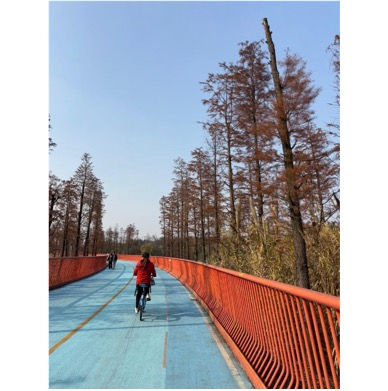
Our journey starts with Jincheng Park. Occupying 166 hectares of land, the park is located in one of the most developed regions of the city. The aim of encouraging human activities is evident in Jincheng Park. Even though there are various kinds and larger areas of trees, a bike lane separates the consistent network of tree growth. People ride on the lane for exercise with trees just beside them. This is primarily because the park bears the responsibility of attracting more residents to the area, so that the housing properties can be sold, the shopping malls nearby can have more sales, and the economy can be boosted. As a result, it is more dedicated to recreation and human engagement. This indicates the entrepreneurial analytic of rewilding in cities that inevitably concerns the demand of capital and economic growth (Turnbull et al., 2025). In the meantime, discourses that present nature as increasing wellbeing (Turnbull et al., 2025) are also adopted on this occasion by encouraging citizens to participate in exercises such as biking and jogging in this dedicated area. The rewilding here is not solely constructing a natural environment but bears complicated efficacies such as urban entrepreneurship and increasing resident health. This proves the social function of rewilding projects in the urban system.
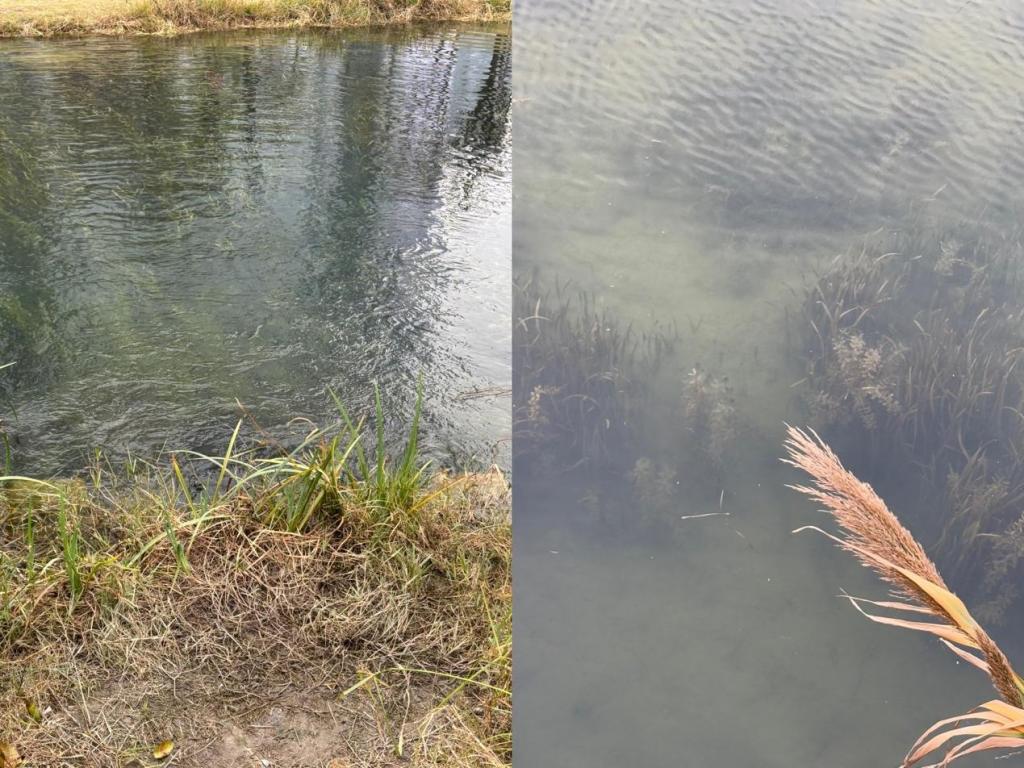
Despite the active participation and appearance of citizens in Jincheng Park, an area is extremely nature-concentrated, which is the place where an area of water is located. There are numerous birds either flying freely in the sky or resting on the trees or the lake. Take a step closer to look down upon the water. The continuous ripples on the surface of the water show that the water here is moving, and it must have come from somewhere else. The lake is crystal clear, and a wide variety of aquatic plants grow freely in it. No wonder, there is a Chinese poem that writes:
‘There lies a glassy oblong pool,
Where light and shade pursue their course.
How can it be so clear and cool?
For water fresh comes from its source.’
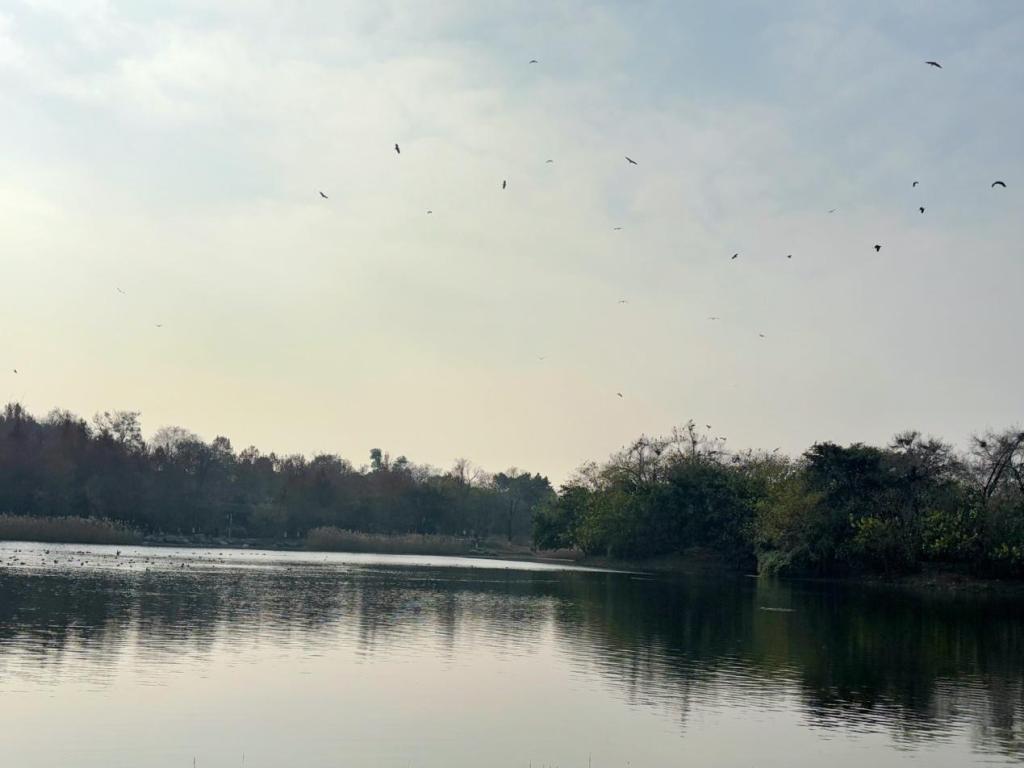
Chengdu is a city born with water. The Minjiang River is the largest tributary of the Yangtze River. The Jinjiang River is a tributary of the Minjiang River, which runs from west to east through Chengdu. Chengdu is also a city built with water. This is because Dujiangyan, a massive dam-free water diversion project built in 270 BC, continues to irrigate all parts of Chengdu and other cities in the province. The water in Jincheng Park comes from the Jinjiang River and is diverted from water systems such as the Minjiang River and Dujiangyan through artificial water diversion projects to ensure water flow and ecological water needs. Migrating with the water ecosystem, the birds also come from the wetlands around the Minjiang River Basin.
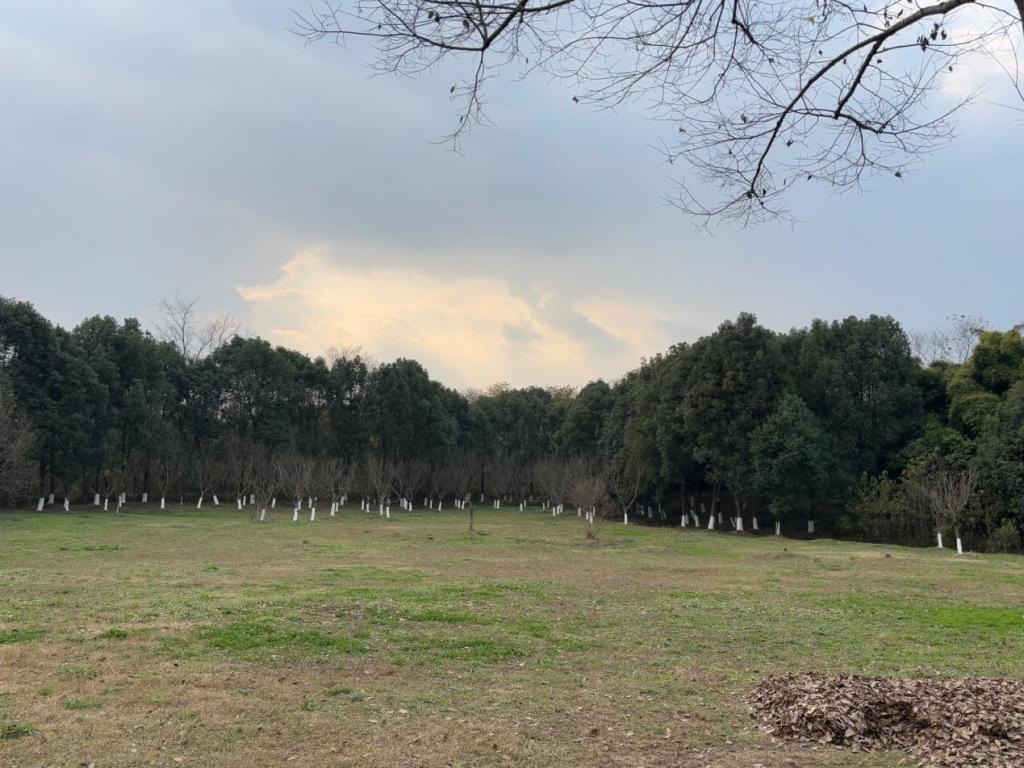
The journey of finding signs of rewilding becomes more rewarding in Qinglong Lake Wetland Park. It is located in the less-developed eastern region of the city. It occupies 379.66 hectares, with Qinglong Lake being the largest ecological lake in the city. Its large size enables it to distinguish human activity areas from natural preserve areas. There are three major areas: the key protection area, the wetland exhibition area, and the recreational activity area in the park. With this categorization, plus its large area, the park effectively separates its social and ecological functions. More than half of the park is a key protection area where the native wetland ecosystem is relatively complete, and human interference is less prevalent.
There are many places in the park where the open lawn areas are distinct from the forests. They are called forests because the trees are fairly abundant and dense, and we cannot see the boundary of the area. Moreover, it is clear that there are no signs of humans, at least common visitors of the park, entering those seemingly unknown areas.
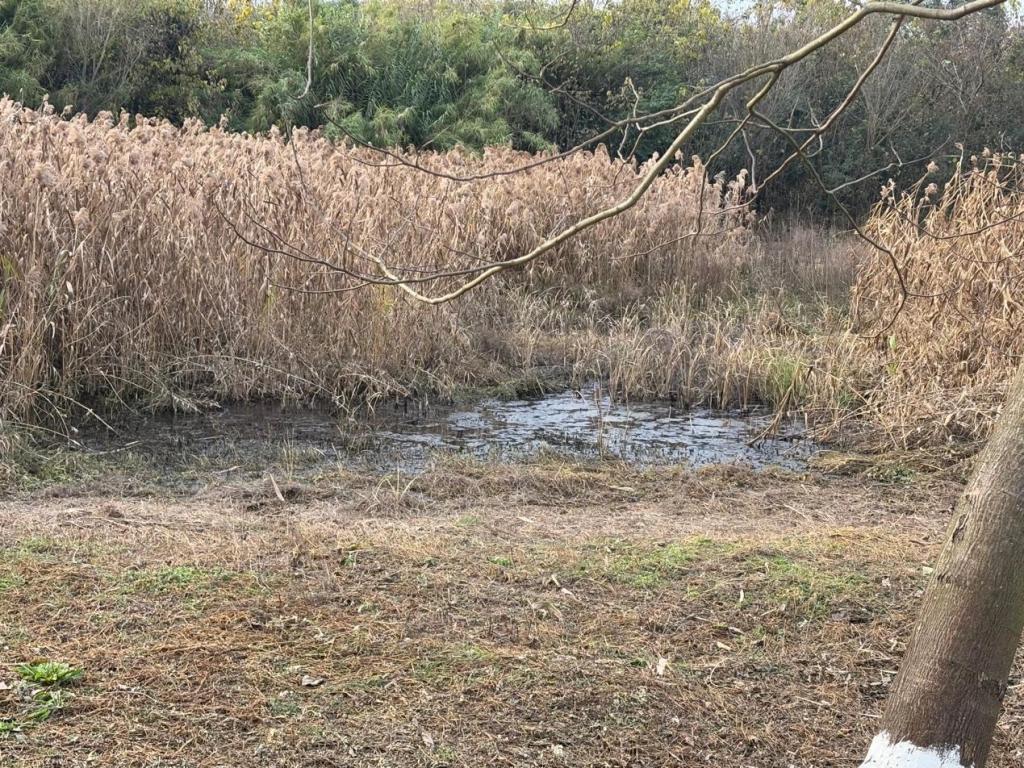
The park is also well-deserved of the ‘wetland’ in its name because there are relatively primitive sites of wetlands found. At least in the far, deep area of land, the weeds run riot here as a result of limited human intervention. Closer to the pedestrian path, the weeds seem to be controlled and removed. This is both for the aesthetics of the area and the convenience of the citizens, as well as the avoidance of the monocultures of dominating species.
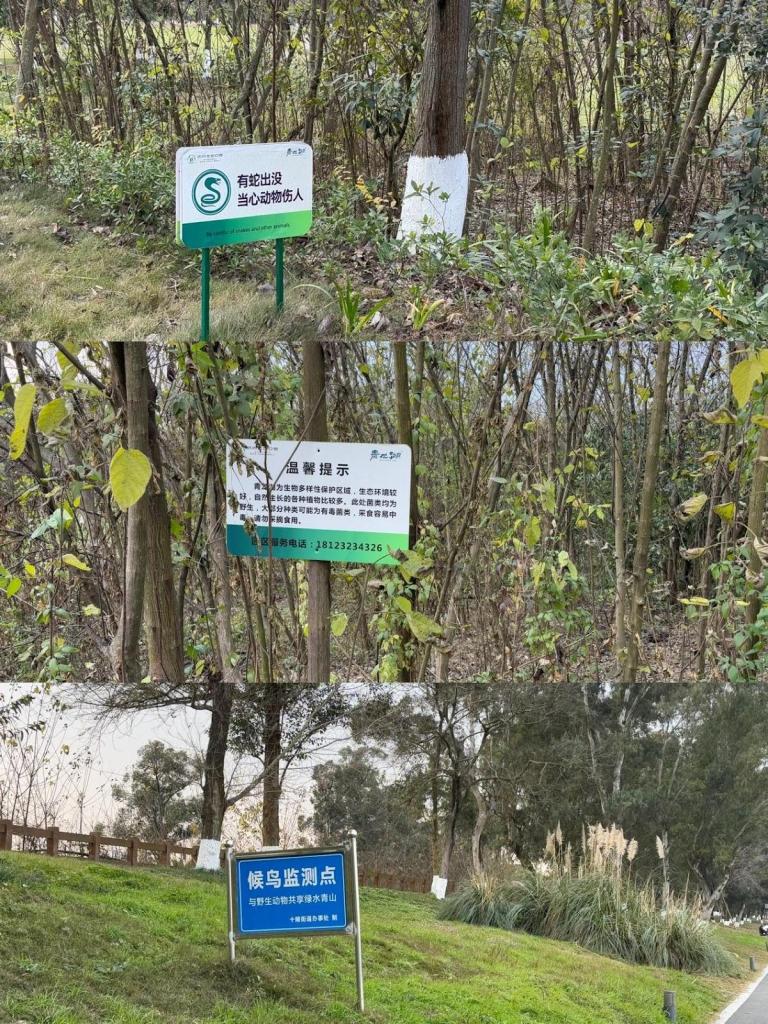
Although we did not catch sight of too many wild animals, the warnings in the park indicate there are some of them in the area. The first sign says, ‘Be careful of snakes and other animals’. The second writes ‘Qinglong Lake is a biodiversity protection area with a good ecological environment and more natural plants. All the fungi here are wild, and most of them may be toxic fungi, which can be poisonous if eaten. Please do not pick and eat’. The third writes ‘Migratory Bird Monitoring Site. Share green waters and mountains with wild animals’. These signs imply that such areas have a relatively high degree of wildness, but as humans are still inevitably present in parks, they are made aware of by the signs to be cautious of the wildlife. At the same time, through making people pay attention to wildlife and engaging the local publics with its maintenance, rewilding areas in the urban system also serve as an opportunity for education (Turnbull et al., 2025).
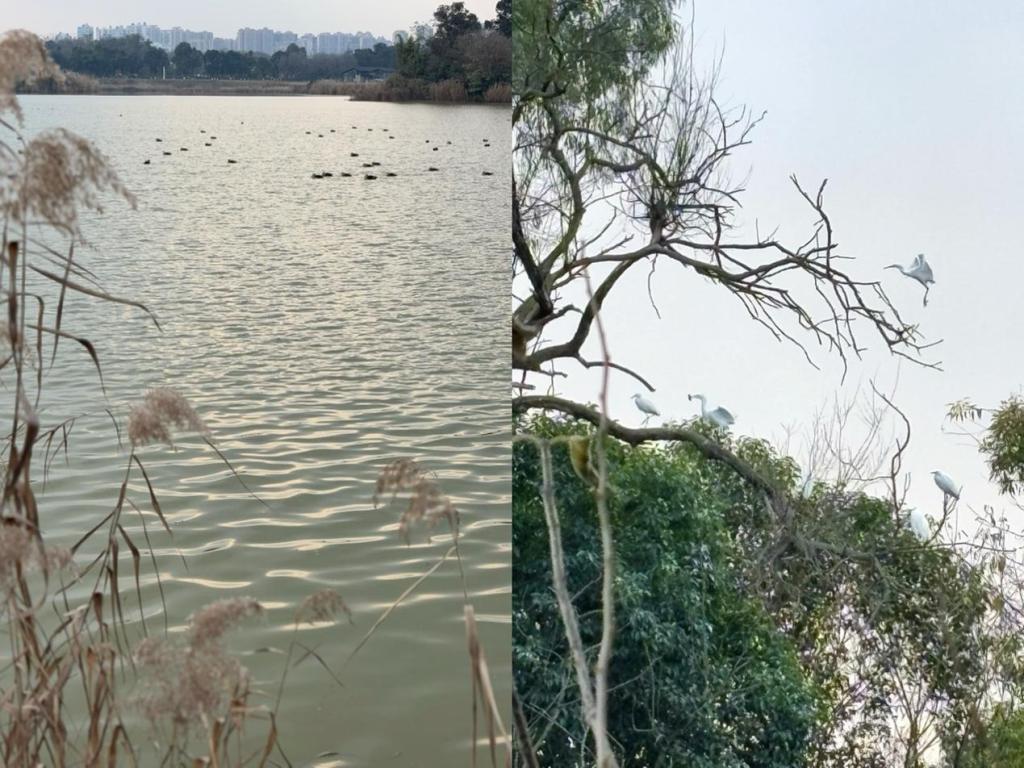
Similar to Jincheng Park, water also plays a vital role in this park. Water in Qinglong Lake Wetland Park was sourced from the Dongfeng Canal, a branch of the river resulting from the Dujiangyan program. Here, we met more diverse bird friends at the side of the water areas. Groups of ducks are wandering leisurely. Our more precious and elegant guests, egrets, rest on a tree beside the river. One of them has something in its mouth and seems to have just returned from its foraging trip.
According to the records, there are more than 200 species of wild birds in the Qinglong Lake area, among which 29 species are rare, vulnerable, and endangered, including one species of first-class nationally protected birds and 14 species of second-class protected birds. Some birds appear here through natural migration and habitat. Qinglong Lake is located on the East Asia-Australasia migratory bird route. Every autumn, winter, and spring, it attracts a large number of migratory waterfowl. Also, due to the multiple habitats within the park, such as wetlands, forests, and shrublands, resident birds like egrets, night herons, night owls, and brown-backed shrieks have been living there for a long time. In addition, the artificial food chain in the park is constructed to attract birds to hunt. Artificial vegetation is designed to provide nesting and hiding places for birds. Last but not least, Qinglong Lake is connected to the surrounding Bailuwan Wetland, Jincheng Lake, and other places through greenways and water systems, forming an ecological corridor where birds can spread freely. Here, the city tends to link the fragmented landscapes, performing this central tenet of rewilding-connectivity (Unnithan Kumar et al., 2022). To do this, it is aware of the necessary implementation of intense sociopolitical labor (Turnbull et al., 2025). In this case, it puts forward the meticulous design and gradual construction of the “Round City Ecological Park” mentioned in the introduction, to make this landscape connectivity possible in this process of urban rewilding.
It is undeniable that water constitutes an essential part not only of each park but also of the connectivity between parks. The water that has been flowing for thousands of years in the city nourishes not only the land and the people but also the ecosystem and nature in the city.
4. Closing remarks
Although the concept of rewilding, including urban rewilding, has appeared for decades in Western academia, it is rarely tested in the case of China, which marks a contribution of this essay as a glance at urban rewilding in parks the country. In cities, rewilding is not solely the introduction of nature, but also a medium for urban entrepreneurship, encouragement of citizen wellbeing, and education. Moreover, rewilding in Chengdu accomplishes the goal of forging an ecosystem connectivity, especially through the water system. This photo essay therefore demonstrates that urban rewilding is a practicable strategy, while its visual methodology helps uncover the multidimensional potential embedded in ecological, social, and economic urban transitions.
References
Atchison, J., Pickerill, J., Arnold, C., Gibbs, L. M., Gill, N., Hubbard, E., … & Watson, M. (2024). Peopled landscapes: Questions of coexistence in invasive plant management and rewilding. People and Nature, 6(2), 458-473.
Cronon, W. (1996). The trouble with wilderness: or, getting back to the wrong nature. Environmental history, 1(1), 7-28.
Frank, B., Delano, D., & Caniglia, B. S. (2017). Urban systems: A socio-ecological system perspective. Sociology International Journal, 1(1), 00001.
McFarlane, C. (2021). Fragments of the city: Making and remaking urban worlds. Univ of California Press.
Perino, A. et al. (2019) Rewilding complex ecosystems. Science (American Association for the Advancement of Science). [Online] 364 (6438), 351–351.
Pettorelli, N., Dancer, A. D., Durant, S. M., Hoffmann, M., Laughlin, B., Pilkington, J., … & Terry, A. (2022). Rewilding our cities. ZSL report, London, UK.
Turnbull, J., Fry, T., & Lorimer, J. (2025). (Re) wilding London: Fabric, politics, and aesthetics. Transactions of the Institute of British Geographers, e12748.
Unnithan Kumar, S., Turnbull, J., Hartman Davies, O., Hodgetts, T., & Cushman, S. A. (2022). Moving beyond landscape resistance: considerations for the future of connectivity modelling and conservation science. Landscape Ecology, 37(10): 2465-2480.
Zoderer, B. M. et al. (2024) Mapping wild nature areas to identify priority areas for urban rewilding in cities: A process-oriented approach. Urban forestry & urban greening. [Online].
#Write for Routes
Are you 6th form or undergraduate geographer?
Do you have work that you are proud of and want to share?
Submit your work to our expert team of peer reviewers who will help you take it to the next level.
Related articles
 Routes