
Volume 5 Issue 2
By Trisha Mehta, Royal College of Art School of Design
Citation
Mehta, T. 2026. Balancing radical and sustainable rewilding: A case study of London’s urban future through the Neighbourhood Mobility Map Guide. Routes, 5(2): 63-74.
1. Introduction
Rewilding has emerged as a powerful yet contested concept in environmental debates, extending beyond ecological restoration to encompass political, social, and cultural dimensions. Within cities, it provokes critical questions: what would it mean for ecological processes to become central to urban life, and how might this disrupt or sustain existing systems?
Two orientations have been particularly influential in shaping rewilding discourse. Radical rewilding prioritises ecological autonomy, envisioning cities restructured primarily around more-than-human needs. While few urban practitioners explicitly advocate this level of ecological autonomy, it is articulated in rewilding scholarship and public debate: advocates like Monbiot (2013) call for self-willed ecological processes, and cases like the Oostvaardersplassen reserve are frequently cited as experiments in “controlled de-controlling” (Keulartz, 2012). This orientation thus foregrounds the relinquishing of human management, raising possibilities of profound urban transformation but also risks of exclusion and disruption (Lorimer, 2015; Jørgensen, 2015; Prior, 2017).
Sustainable rewilding, by contrast, emphasises negotiated transitions, aligning ecological goals with governance, community engagement, and infrastructural realities. It is context-sensitive, incremental, and attentive to inclusion (Prior, 2016; Turnbull et al., 2025). In the London context, this is reflected in initiatives such as the Mayor’s Rewild London Fund, the National Park City movement, and community-led projects like Rewild My Street, which pursue ecological restoration through collaborative, small-scale interventions rather than radical transformation. As Turnbull and colleagues argue in their study of London, these orientations are not only theoretical but are woven into the city’s fabric, politics, and aesthetics.
Alongside these perspectives, this paper introduces speculative rewilding as a methodological approach. Drawing from speculative design and foresight practices (Dunne & Raby, 2013; Auger, 2013), it does not aim to predict future cities but to provoke debate by materialising possible trajectories. Speculative rewilding thus opens a space to interrogate how radical and sustainable rewilding might be imagined, contested, and adapted in urban contexts.
This paper explores these dynamics through a participatory foresight study with young people in London. By situating rewilding within systems thinking, scenario planning, and speculative design, it examines how youth participants engaged with radical and sustainable rewilding, and how speculative artefacts enabled critical reflection on the tensions between ecological ambition and social inclusion. It argues that rewilding must be understood not only as ecological restoration but as a conceptual and speculative intervention for rethinking the future of urban life.
2. Theoretical framework
2. 1. Conceptualising rewilding through systems thinking
As outlined in the Introduction, rewilding can be approached through radical and sustainable orientations (Jørgensen, 2015; Prior, 2016; Turnbull et al., 2025). Situating these within a systems thinking perspective (Batty, 2007) highlights the interdependencies between ecological restoration, urban infrastructure, governance, and social equity. Systems thinking foregrounds how interventions in one part of the city reverberate across others, producing feedback loops that are ecological, social, and political.
From this perspective, rewilding is not simply a matter of ecological restoration but a systemic reconfiguration. Introducing ecological corridors, for instance, affects patterns of mobility, employment, and governance, while also reshaping how residents understand their relationship to the more-than-human world (Lorimer, 2015; Keulartz, 2012). Such changes ripple outward, generating both intended and unintended consequences.
Participants in the workshops engaged directly with this complexity. Some described rewilding as a “domino effect,” where an ecological intervention would set off cascading changes across infrastructure, culture, and everyday life. Others noted the risks of imbalance, warning that prioritising ecology without careful negotiation could undermine accessibility and social inclusion. These reflections underscore the value of systems thinking in conceptualising rewilding: it makes visible how seemingly local ecological actions can trigger wider disruptions. For instance, participants discussed that an ecological corridor might simultaneously enhance habitat connectivity while complicating mobility for disabled residents, carers, or those reliant on stable transport, and that creating new habitats could also alter local employment patterns or neighbourhood economies. Comparable systemic ripple effects have been documented in the Cheonggyecheon Stream Restoration in Seoul, where ecological rehabilitation reshaped transport routes, commercial activity, and patterns of public accessibility (Cho, 2010; Kang and Cervero, 2009), illustrating how a single intervention can reverberate across multiple urban systems.
2.2. Scenario planning and speculative design as methodologies
This study employed a combination of scenario planning and speculative design to engage participants in reimagining urban futures for speculative rewilding. Scenario planning enables structured exploration of multiple, plausible trajectories rather than single-point predictions (Van der Heijden, 2010; Inayatullah, 2008). By foregrounding uncertainty and branching possibilities, scenarios create a framework through which participants can interrogate trade-offs and tensions.
Speculative design complements this approach by translating scenarios into tangible artefacts that provoke debate rather than provide solutions (Dunne & Raby, 2013; Auger, 2013). Whereas scenario planning mapped possible pathways, speculative artefacts materialised those pathways, allowing participants to experience and critique how radical and sustainable rewilding might reshape their city. In this way, speculative design functions as what Candy and Dunagan (2017) describe as an “experiential scenario,” a provocation that stimulates reflection on lived consequences of future conditions.
Crucially, these methods were applied through a participatory framework that centred young people as co-creators of futures knowledge. Drawing from participatory foresight approaches (UNDP, 2021), the workshops asked participants to imagine urban life under rewilded conditions, to surface anxieties and aspirations, and to co-develop speculative artefacts as records of their visions. This combination of structured scenario building and speculative materialisation enabled participants to articulate tensions between ecological ambition and social inclusion, and to test the limits of radical and sustainable rewilding as urban strategies.
2.3. The Neighbourhood Mobility Map Guide as a speculative artefact
To represent the insights of the scenario work, the Neighbourhood Mobility Map Guide was designed as a speculative artefact. The choice of a map was deliberate: mobility and navigation had surfaced in the workshops as central tensions in a rewilded city, shaping how residents might access services, move through ecological corridors, or negotiate restricted infrastructures.
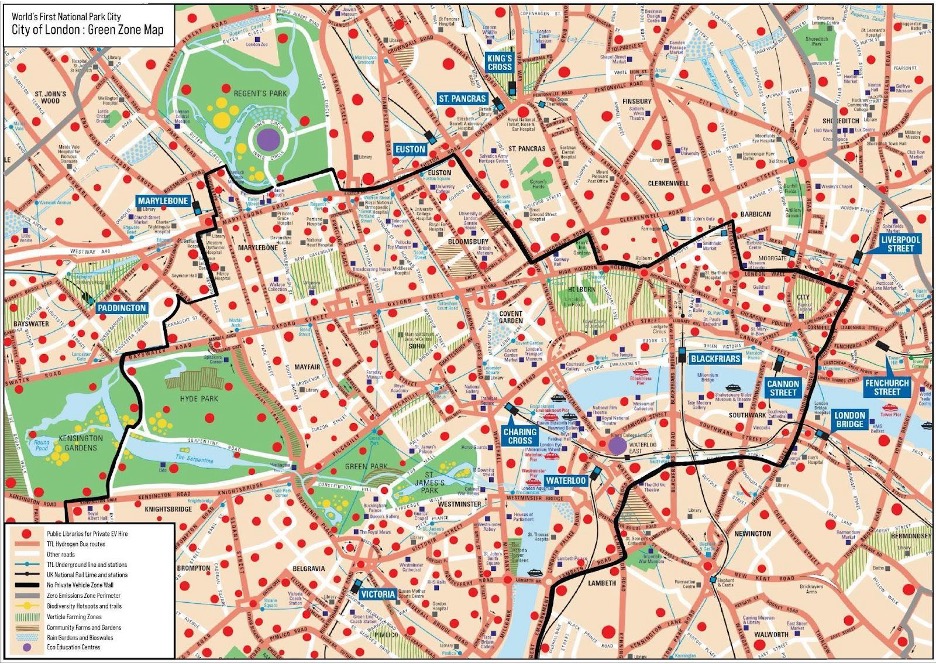
Figure 1: ‘Neighbourhood Mobility Map Guide’ future artefact. Source: (Mehta, 2024).
The map was not designed as a predictive blueprint but as a provocation, rendering abstract concerns in a tangible, spatial form. Roads were replaced by ecological pathways, neighbourhoods were reimagined as biodiversity zones, and governance structures were depicted as ecological councils rather than municipal authorities. These cartographic transformations allowed participants to imagine how radically ecological priorities might reorganise the familiar patterns of urban life.
By visualising the tensions embedded in the Regeneration Stagnation scenario, the Neighbourhood Mobility Map Guide invited participants to confront both the possibilities and frictions of rewilding. It crystallised ecological ambition in a form that was simultaneously playful, unsettling, and open-ended; an artefact that, in Dunne and Raby’s (2013) sense, functioned not to solve problems but to stimulate debate and expand the horizon of urban possibility.
3. Rewilding futures in London
3.1. The regeneration stagnation scenario
The Regeneration Stagnation scenario was developed as part of the participatory foresight process to explore how radical rewilding might unsettle urban life if pursued without sustained negotiation between ecological, social, and infrastructural needs. It deliberately presents an exaggerated and unlikely future in which ecological priorities had been advanced aggressively, leading to large-scale habitat corridors, restricted access to certain infrastructures, and governance systems oriented toward ecological councils rather than municipal authorities.
This scenario was not intended as a forecast but as a way of surfacing tensions between ecological ambition and urban liveability. Participants were asked to consider how mobility, governance, and economic activity might shift under conditions where ecological logics took precedence. For some, this provoked excitement about the possibility of cleaner air, thriving biodiversity, and cities aligned with more-than-human priorities. For others, it raised unease about exclusion and disruption: everyday needs such as reliable transport, accessible infrastructure, and cultural continuity seemed under threat.
Accessibility, in particular, became a recurring theme, with participants noting that a radically rewilded city could marginalise those who rely on dependable mobility systems. These concerns are returned to in Section 4.3, where issues of mobility and economic structures are examined in depth. By articulating both the appeal and the risks of radical rewilding, the Regeneration Stagnation scenario crystallised the central tensions of this study: the need to imagine ecologically ambitious urban futures while remaining attentive to questions of equity, governance, and participation.
3.2. Participant engagements with the Neighbourhood Mobility Map Guide
As detailed in Section 2.3, the Neighbourhood Mobility Map Guide translated the Regeneration Stagnation scenario into a visual provocation. In this section, the focus lies on how participants engaged with and interpreted the artefact.
The map sparked lively debate about the everyday implications of radical rewilding. Some participants found it empowering, describing how the guide offered new ways of navigating the city and reimagining relationships between humans and ecosystems. One participant noted: “It felt like we could actually see a different London. One where nature shapes the routes we take.” Others were more sceptical, raising concerns about exclusion and disruption. “If transport corridors are gone, who really gets to move freely? Not everyone,” one participant argued.
Some were intrigued by the idea of travelling “along the routes of pollinators,” while others worried about accessibility: “How would a parent with a pushchair use this city? What about those who need reliable transport to work?”
These exchanges show how the artefact functioned as a mirror for participant hopes and anxieties. It opened space for critique as much as imagination, surfacing questions about equity, access, and governance that were not immediately apparent in the abstract scenario. In this way, the Neighbourhood Mobility Map Guide exemplifies the role of speculative artefacts not as solutions but as prompts for reflection; an invitation to negotiate what kind of rewilded futures might be desirable, feasible, or just.
4. Rewilding as a disruptive urban paradigm
4.1. Destabilising anthropocentric urban systems
One of the strongest themes to emerge from the workshops was unease about how radical rewilding could destabilise established urban systems by shifting priority from human convenience to ecological autonomy. Participants recognised that this provocation was both exciting and unsettling. “It forces us to think differently—not just about ourselves, but about the city as a living system,” noted one participant. Others emphasised the risks, warning that ecological corridors replacing transport networks could marginalise those reliant on reliable infrastructure. Accessibility, in particular, was a recurring point of tension, returned to in Section 4.3.
The Regeneration Stagnation scenario amplified these concerns by depicting a city where navigation systems were dictated by ecological rhythms. Participants debated how far such a shift could go without undermining the functions of everyday life. Some argued it might encourage longer-term thinking in governance, while others feared it could disrupt livelihoods and create new forms of exclusion.
These reflections underscore the paradox of radical rewilding: while it unsettles anthropocentric assumptions and opens possibilities for more-than-human governance, it also risks destabilising urban systems in ways that could exacerbate inequality. The question of ecological determinism is raised here, and is explored more fully in Section 4.4.
4.2 Rewilding as a posthumanist vision
Extending these debates into governance, participants considered what it would mean to redistribute authority toward more-than-human priorities. Radical rewilding, understood here as the reorientation of cities around ecological rather than human convenience, was imagined not only as a shift in infrastructure but as a potential reconfiguration of decision-making itself.
Some participants found this prospect compelling. One reflected that “if rivers and pollinators decide our maps, then councils don’t just speak for people anymore- they speak for the ecosystem.” Others suggested that such an orientation might help politics escape the short-termism of election cycles: “It forces leaders to think long-term, because they’re accountable to something bigger than us.” For others, however, this vision provoked discomfort. “If humans step back too far, we risk losing our cultural memory,” one participant warned. These responses revealed a tension between embracing ecological governance and maintaining social and cultural continuity.
Participants also voiced unease about the risk of ecological determinism, and the idea that urban life could become wholly dictated by ecological priorities. This concern is developed further in Section 4.4. What matters here is that young people recognise both the appeal and the challenge of a post-humanist vision: one that unsettles anthropocentric authority, yet demands careful negotiation to preserve equity, heritage, and urban identity.
4.3 Rewilding’s impact on urban mobility and economic structures
Mobility emerged as one of the most contested aspects of the Regeneration Stagnation scenario. By depicting a city where transport corridors had been replaced by ecological pathways, the Neighbourhood Mobility Map Guide provoked strong debate. Several participants worried about how this would affect those who rely on accessible, reliable infrastructure. “It sounds beautiful, but how would someone in a wheelchair cross the city if buses can’t run?” asked one. Another questioned whether parents and older residents would be disadvantaged: “Rewilding should make the city greener, not trap people in their neighbourhoods.” These reflections highlight the risk that radical ecological priorities, if pursued inflexibly, could generate new forms of exclusion in mobility systems.
Economic implications were similarly contentious. Some participants imagined that rewilding could reshape the city’s economy around conservation, biodiversity management, or low-impact industries. Others, however, were concerned about the loss of existing jobs. “If everything shifts to farming or conservation, what happens to people in tech or service industries?” one participant asked. Another warned that new green jobs might not be distributed fairly: “It only works if everyone has access, not just people already connected to environmental networks.” These exchanges revealed both optimism and scepticism: while rewilding was seen as an opportunity to revalue ecological labour, participants also cautioned against reproducing economic inequality under the guise of sustainability.
Together, these concerns underscored the difficulty of balancing ecological ambition with social inclusion. For participants, rewilding’s impact on mobility and economic structures raised questions not only about how the city might function, but also about who would be able to participate fully in its future.
5. Conclusions: Rewilding as speculative and adaptive framework and intervention
The workshops showed that rewilding is not a fixed endpoint but an evolving and adaptive process. Participants used the Regeneration Stagnation scenario to interrogate the frictions it exposed: between ecological ambition and accessibility, cultural continuity and disruption, inclusion and exclusion. Their reflections reinforce Jørgensen’s (2015) argument that rewilding is a “plastic” concept that is flexible, contested, and constantly reshaped through practice.
Speculative methods were crucial in enabling this adaptive understanding. Rather than offering solutions, speculation created a safe space for participants to explore extremes and test their desirability. “It helps us imagine the risks before they happen; what it would actually feel like if nature came first,” one participant explained. Another emphasised speculation as a way of thinking expansively: “You can’t plan a future unless you’ve tested its extremes.” These comments illustrate how speculative rewilding functioned as a provocation for critical reflection rather than prediction.
This speculative dimension complements sustainable rewilding, which grounds ecological ambition in negotiation and equity. Where radical rewilding foregrounds ecological autonomy, speculative rewilding opens questions about its risks and potentials, and sustainable rewilding anchors these imaginaries in practice. Seen together, they suggest that rewilding can operate as an adaptive framework: not prescriptive but responsive, capable of evolving with shifting ecological, political, and social priorities.
This study has distinguished between radical, sustainable, and speculative rewilding, showing how these orientations can be analytically separated yet also productively connected. Radical rewilding foregrounds ecological autonomy, sustainable rewilding emphasises negotiated transitions, and speculative rewilding uses design and foresight to provoke reflection. Taken together, they illustrate the diverse ways in which rewilding can be mobilised to interrogate the future of urban life.
The participatory foresight workshops revealed that young people see rewilding not as a fixed solution but as an ongoing negotiation between ecological ambition and lived reality. “We need cities that are alive, but also cities that don’t leave people behind,” as one participant put it. This balance, between ecological flourishing and social inclusion, was a consistent theme across their contributions.
Lessons from rural rewilding reinforce the need for such attentiveness. Controversies at the Oostvaardersplassen reserve in the Netherlands, in particular the widely documented winter 2017–18 crisis, when mass herbivore starvation exposed the flaws of non-intervention rewilding (Theunissen, 2019), and community resistance to species reintroductions across Europe demonstrate how rewilding can falter when ecological priorities are imposed without adequate social inclusion, governance, or stakeholder negotiation.Urban contexts, with their dense infrastructures and layered cultural identities, require even greater care to avoid similar pitfalls.
This study contributes conceptually by reframing rewilding as both speculative and adaptive; empirically by documenting youth perspectives on rewilding scenarios; and methodologically by demonstrating the role of speculative artefacts in translating abstract debates into tangible provocations. By integrating foresight, design, and participatory research, it positions rewilding not as utopia or determinism, but as an evolving practice that can help cities negotiate more equitable and ecologically ambitious futures.
References
Auger, J. (2013) ‘Speculative design: Crafting the speculation’, Digital Creativity, 24(1), pp. 11–35.
Batty, M. (2007) Cities and complexity: understanding cities with cellular automata, agent-based models and fractals. Cambridge, MA: MIT Press.
Candy, S. and Dunagan, J. (2017) ‘Designing an experiential scenario: The people who vanished’, Journal of Futures Studies, 22(3), pp. 35–52.
Cho, M. (2010) ‘The politics of urban nature restoration: the case of Cheonggyecheon restoration in Seoul’, International Development Planning Review, 32(2), pp. 145–165.
Dunne, A. and Raby, F. (2013) Speculative Everything: Design, Fiction, and Social Dreaming. Cambridge, MA: MIT Press.
Jørgensen, D. (2015) ‘Rethinking rewilding’, Geoforum, 65, pp. 482–488.
Kang, C.-D. and Cervero, R. (2009) ‘From elevated freeway to urban greenway: land value impacts of the Cheonggyecheon restoration’, Urban Studies, 46(13), pp. 2771–2794.
Keulartz, J. (2012) ‘The emergence of rewilding in Europe: a cultural-historical analysis’, Environmental Values, 21(3), pp. 277–297.
Lorimer, J. (2015) Wildlife in the Anthropocene: Conservation after Nature. Minneapolis: University of Minnesota Press.
Mehta, T. (2024) Neighbourhood Mobility Map Guide. [Digital Artwork].
Monbiot, G. (2013) Feral: searching for enchantment on the frontiers of rewilding. London: Allen Lane.
Theunissen, B. (2019) ‘The Oostvaardersplassen fiasco’, Isis, 110(2), pp. 341–345.
Turnbull, J., et al. (2025) ‘(Re)wilding London: Fabric, politics, and aesthetics’, Transactions of the Institute of British Geographers. Published 10 February.
UNDP (2021) Participatory Futures: Engaging Young People in Foresight. New York: United Nations Development Programme.
Van der Heijden, K. (2010) Scenarios: The Art of Strategic Conversation. 2nd edn. Chichester: John Wiley & Sons.
#Write for Routes
Are you 6th form or undergraduate geographer?
Do you have work that you are proud of and want to share?
Submit your work to our expert team of peer reviewers who will help you take it to the next level.
Related articles
 Routes