
Volume 5 Issue 2
By Prerena Balu, Newcastle University
Citation
Balu, P. 2026. Blue rewilding and nature-inclusive design: Offshore wind farms as anchors for marine biodiversity recovery in the UK. Routes, 5(2): 87-100.
Abstract
Offshore Wind Farms (OWFs) have become a critical component of the UK’s transition into decarbonising the energy industry yet there are underexplored opportunities for concurrent ecological restoration. Additionally, they can cause unintended anthropogenic impacts meaning sustainable innovation is needed beyond impact mitigation. Marine Rewilding Initiatives (MRIs) and Nature-inclusive Design (NID) can offset these environmental disturbances through self-sustaining strategies such as artificial reef structures and bivalve reef restoration, with the ‘stepping stone’ effect of hard substrate species combining both to broaden marine connectivity. Northwestern Europe are trailblazers in integrating these approaches with OWF developers and mandating net gain policies through schemes such as the Rich North Sea programme. Case studies further underscore replenishing threatened species through integrating MRIs with OWFs. This study aims to evaluate the role of MRIs as mitigators of OWFs as part of Offshore Renewable Energy Development (ORED) policy and emphasises the need for long-term research to ensure ecological and socio-economic viability.
1. Introduction
The UK is expanding into decarbonising the energy industry with Labour (2024) proposing to quadruple offshore wind by the end of this decade. In addition to meeting national Net Zero standards, the 30by30 initiative endeavours to protect 30% of land and sea (Department for Environment, Food & Rural Affairs, 2024). This focus on marine biodiversity has also contributed to the more climate-focused 2015 UN Sustainable Development Goals (SDGs) which may factor into contextualising international governance of energy systems (Velenturf et al., 2021). When considering SDG 14.2: Sustainably Managing and Protecting Marine Ecosystems (Moretti et al., 2024), there is a globally understudied potential for a net biodiversity gain within the physical offshore structures and conserving these unique marine habitats.
To limit these direct anthropogenic drivers of ecological change, marine rewilding initiatives (MRIs) seek to establish marine protected areas (MPAs) and facilitate the abundance of threatened habitats and species (Rees et al., 2020). Carver et al. (2021) proposed that the process of rewilding involves restoring natural processes and degrees of the food web at all trophic levels to be self-sufficient with biota that would have existed prior to anthropogenic interference.
This study reviews how marine rewilding and nature-inclusive designs can offset the adverse ecological impacts of offshore wind farms (OWFs) based on published literature spanning the UK and Europe. This can offer a critical starting point for marine biodiversity recovery (Sheehan et al., 2021) against the increasing human reliance on ocean resources, notably within benthic regions to match the growing development of offshore energy structures. Nonetheless, the effectiveness of MRIs may be restrained by governance and policy frameworks in the UK, which lack mandatory biodiversity offsetting requirements for developers and prominent regulatory incentives.
2. The unintended ecological impacts of offshore wind energy
Whilst OWFs pioneer the transition to renewable energy, the stages to their life cycle introduce substantial ecological challenges, and if not effectively counterbalanced, may undermine the lasting viability of marine ecosystems.
2.1. Acoustic and hydrodynamic disturbances
The installation and operation of OWFs significantly alter marine habitats through seabed degradation and acoustic pollution. According to Madsen et al. (2006), pile-driving generates the highest sound pressure levels during the OWF construction phase, disrupting long-range marine mammals and having implications on hearing impairment with harbour porpoises (Brandt et al., 2011). Acoustic trauma has also been theorised to acutely impact cephalopod populations and their offspring (Solé et al., 2022) and this has commercial implications for species such as the common cuttlefish which are vital to both marine ecosystems and fisheries.
Furthermore, the presence of OWFs can cause alterations in hydrodynamic conditions which can further disrupt larval survival and recruitment. Due to the inevitable overlap between OWFs and spawning grounds, such as of flatfish species as depicted by Figure 1, the differences between settlement rates of distinct species can have long-term implications on population dynamics and Barbut et al. (2019) further proposes that these impacts should be studied in situ.
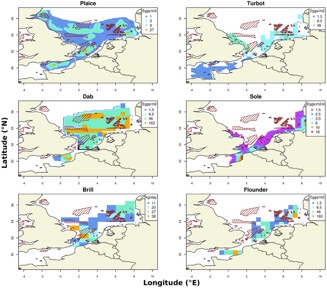
Figure 1. The overlap of six flatfish spawning grounds (plaice, turbot, dab, sole, brill and flounder) with offshore wind farms (depicted by hatched areas) shown in biomass or egg density (Barbut et al., 2019).
2.2. Seabed disruptions
OWFs further impact hydrodynamics by increasing current speeds around monopile foundations (Rivier et al., 2015) which can cause sediment resuspension (Rivier et al., 2016). De Smit et al. (2021) further highlighted how disrupting macrobenthic species’ habitats alters sediment stability as these organisms regulate sediment erodibility.
The oceanic water column and benthos are inherently linked (Gray and Elliott, 2009, p. 260) and as OWFs create artificial hard substrata, they can cause erosion of the natural seabed which changes its sediment composition (Mangi, 2013). This can result in habitat loss for some benthic species as the construction phase particularly reduces nutrient cycling (Burkhard et al., 2011) and natural bioturbation is disrupted. As the OWF industry expands, its unintended marine impacts underscore the necessity in safeguarding ecosystem stability to support its growing offshore resource demands, and these combined stressors illustrate the imminence to enhance ecosystem resilience as well as restore habitats.
3. Reefs and recovery for offshore wind futures
Nature-based solutions are now an emerging strategy as OWFs transition from sites of ecological disruption to facilitators of ecosystem regeneration. By creating self-sufficient refuges and restoring degraded habitats, marine rewilding strategies can help bypass the negative impacts of OWFs and this ensures ecological sustainability in the growing offshore renewable energy sector.
3.1 Artificial reefs and habitat restoration
In optimal conditions, offshore wind turbine foundations provide hard substrate for marine life. These structures can facilitate the settlement and dispersal of non-indigenous species such as Codium fragile ssp. tomentosoides (Bulleri and Airoldi, 2005) due to differing fluid dynamics providing new shelters and acting as marine corridors. Scour protection structures can also act as artificial reefs, increasing fish biomass around artificial reefs and the settlement of crustaceans and algae improves food availability.
As illustrated in Figure 2a, man-made polypropylene fronds used to resist erosion also resemble seagrass beds (Langhamer, 2012) and possess the ability to conceal diverse food webs enhancing marine biodiversity. This increased habitat complexity advances ecological functioning to diversify marine life and can act as ‘acoustic refuges’ to protect resident fish populations by buffering underwater noise (Wilson et al., 2013) such as pile-driving activity.
Figure 2b also shows hard substrates on the seabed that may be re-colonised by epibenthic communities such as crustaceans, molluscs, and other invertebrates (Kingma et al., 2024) notably as they are a suitable attachment point for shellfish. Scour protections made of excavated rock at Lillgrund OWF in Sweden for instance, were a nature-inclusive design to attract biodiversity around the site (Langhamer, Dahlgren and Rosenqvist, 2018). Though scour protections potentially could induce the artificial reef effect (Langhamer, 2012), naturally occurring shellfish aggregations are particularly advantageous in contributing to ecosystem recovery, with as their role in offsetting sediment disturbance on the seafloor caused by OWFs.
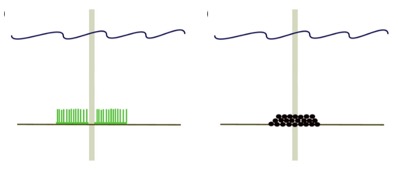
Figure 2. Illustrations of common scour protection procedures around monopile OWF foundations such as (a) Polypropylene fronds (b) Hard substrate (e.g. boulders or gravel). Adapted from Langhamer (2012).
3.2. Bivalve marine rewilding initiatives
Oyster reefs have roles in engineering productive habitats to support complex marine food webs (Vaughn and Hoellein, 2018) and Crain and Bertness (2006) further explored that in the changing offshore environment, oyster reefs can even mitigate against physical stresses providing a natural, self-sustaining habitat for more fragile species.
Bivalve molluscs, such as oysters, also filter pollutants and impact nutrient cycling (Ferreira et al., 2018) and therefore bivalve marine rewilding initiatives can improve seabed integrity by stabilising sediments. Coco et al. (2006) theorised that increased bivalve density reduces sediment resuspension which can counteract hydrodynamic fluctuations generated by OWFs.
Historically, much of the southern North Sea seabed was covered by broad stretches of hard substrates such as gravel beds and until the late 19 th century, the European flat oyster (Ostrea edulis) occupied the Central North Sea (Bennema, Engelhard and Lindeboom, 2020). Nonetheless, populations deteriorated due to overfishing and subsequently lower chances of inter-colony fertilisation (Gross and Smyth, 1946).
According to ter Hofstede, Williams, and M. van Koningsveld (2023), there is a potential in using the hard substrate rock installations in southern North Sea OWFs to connect new or prevalent oyster reefs to restore the abundance of these protected species. The integration of using artificial reefs with hard substrates to create small habitat patches in OWFs (Henry et al., 2018) can develop into secondary biogenic reefs (Fowler et al., 2019), providing homes for rarer species and enhancing overall ecosystem functionality. Adams et al. (2014) coined the ‘stepping stone’ effect as a population structure model referring to how new habitats can serve as intermediate sites to promote connectivity between previously isolated areas and result in species dispersal for both native and invasive species. Figure 3 illustrates how artificial reefs at OWFs create both small-scale effects around individual turbines and a larger-scale impact that extends beyond the farm, through the connectivity of hard substrate species (Degraer et al., 2020).
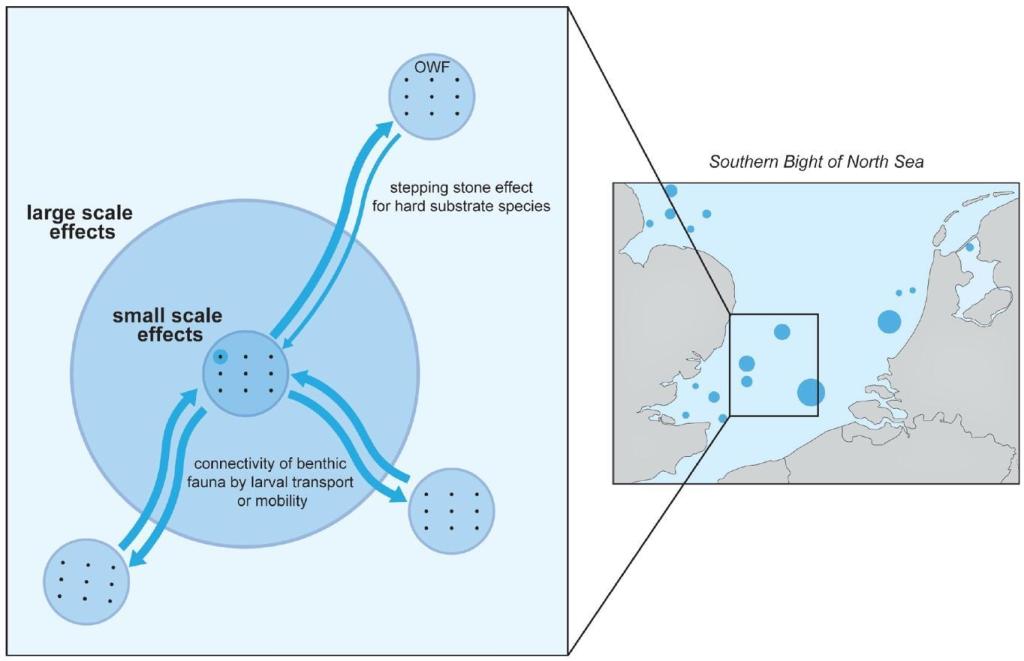
Figure 3. Illustration of how OWF artificial reefs create small- and large-scale effects by the connectivity of hard substrate species via the ‘stepping stone’ effect (Degraer et al., 2020).
3.3. A Dutch case study
Building on the theory of the ‘stepping stone’ effect, applied marine rewilding initiatives have occurred in Northwest Europe such as part of the Rich North Sea programme which prioritises restoring biogenic reefs within existing OWFs for biodiversity enhancement (Hermans, Bos and Prusina, 2020).
For instance, the Blauwwind consortium of OWF developers, constructors and operators are conducting field experiments within the Borssele III and IV OWFs in the Dutch North Sea to establish native oyster reefs and promote ecological development, with 2400 adult flat oysters deployed in 2020 (Reuchlin et al., 2021). Pilot restoration projects of the European flat oyster conducted by Bos et al. (2023) found successful growth and reproduction of translocated oysters from Ireland, Norway and other regions of the Netherlands in OWFs. Blauwwind (2023) provided updates on this project in that 88% of the oysters were ready to reproduce and there were 128 species in total identified at the wind farm encompassing the increase in species richness. Figure 4 summarises the general timeline of this restoration project.
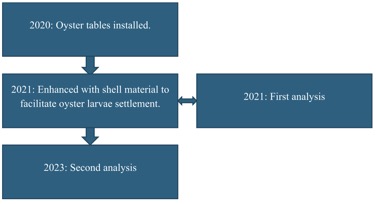
Figure 4. Research overview for the 2020 pilot restoration project at Borssele III and IV OWFs, conducted by Blauwwind and Eurofins Aquasense. Data used from (Blauwwind, 2023).
4. Policy integration and future directions
The success of this rewilding initiative can be attributed to the Dutch government’s policy mandating OWF developers to incorporate ecological benefits into its tenders (Panny et al., 2023) and prove a net biodiversity gain. This led to developers such as Vattenfall (2022) aiming to make a net positive contribution to biodiversity by 2030. The Netherlands are pioneering efforts to incorporate ecological benefits such as through the North Sea Net Gain study in partnership with the Dutch-led Rich North Sea programme (Memija, 2022).
Conversely, the UK has no mandatory biodiversity offsetting for OWFs and although The Crown Estate (2024) Leasing Round 5 (Celtic Sea) introduces marine net gain principles, it lacks enforcement. Marine net gain (MNG) is voluntary as opposed to a legal requirement with biodiversity-positive criteria not integrated into OWF permitting. Therefore, policy recommendations could include evidence-backed initiatives such as requiring habitat restoration offsets in planning approval and incentivising these through tender scoring and government subsidies (Burney, 2023). Cross-border collaboration can further standardise these practices.
Further research should involve long-term monitoring of artificial reef developments (Ramm et al., 2021) alongside other less studied nature-inclusive design strategies or types of OREDs such as exploring the ecological opportunities of floating wind farms (Danovaro et al., 2024). Remote sensing and AI (Tang et al., 2024) alongside large-scale experimental trials can fill data gaps about the true effectiveness of MRIs to detect unforeseen ecological changes. Understanding species connectivity and population resilience will determine whether MRIs contribute to long-term population viability (Cowen and Sponaugle, 2009) or are short-term biodiversity hotspots.
While the potential ecosystem services that OWFs could provide are underexplored from a social science perspective (Haraldsson et al., 2020), there is a need for equitable interdisciplinary perspectives with how resource use and public engagement trade-offs influence governance (Jouffray et al., 2020). Evaluating these socio-economic dynamics can justify policy support and funding to align conservation goals like the SDGs and 30by30 with economic incentives.
5. Conclusion
Although OREDs align with the UK’s Net Zero and sustainability goals, there is a lack of enforcement for biodiversity net gain with the decarbonisation of the energy sector. Marine rewilding is an under-researched field that can offset some of the ecological disruptions of OWFs through their life cycle, and nature-inclusive design is an emerging field with Northeastern European countries pioneering pilot projects.
OWFs contribute to anthropogenic noise pollution, alter hydrodynamics and cause seafloor and sediment disruptions yet targeted, large-scale efforts can recover positive conservation outputs. For instance, hard substrate species can benefit from scour protections in OREDs aiding connectivity and can replenish declining species populations such as at the Borssele III and IV OWFs. This aligns to the Rich North Sea programme being a trailblazer in the integration of MRIs with ORED development and the UK lacks this enforcement despite increasing demand for the OWF industry, risking missed opportunities for marine restoration. In conclusion, the UK government should consider a shift from ecological mitigation to adaptively managing proactive restoration and mandate nature-inclusive offshore development.
Acknowledgments
I would like to thank first and foremost all my family and loved ones for supporting me as this milestone could not have been possible without your individual inputs, especially my sister, Akash, Ayesha and Leo. My gratitude extends to the Youngwilders team who have opened the door to many incredible opportunities for me and the Natural History Society of Northumbria who continue to inspire me and my closest peers and colleagues who fuel all my enthusiasm for the natural world and encourage me to stay optimistic and ambitious.
References
A Rivier, Bennis, A., Pinon, G., Gross, M. and Magar, V. (2015) ‘Regional numerical modelling of offshore monopile wind turbine impacts on hydrodynamics and sediment transport’, CRC Press eBooks, pp. 807–813. Available at: https://doi.org/10.1201/b18973-114.
Adams, T.P., Miller, R.G., Aleynik, D. and Burrows, M.T. (2014) ‘Offshore marine renewable energy devices as stepping stones across biogeographical boundaries’, Journal of Applied Ecology. Edited by M. Frederiksen, 51(2), pp. 330–338. Available at: https://doi.org/10.1111/1365-2664.12207.
Barbut, L., Vastenhoud, B., Vigin, L., Degraer, S., Volckaert, F.A.M. and Lacroix, G. (2019) ‘The proportion of flatfish recruitment in the North Sea potentially affected by offshore windfarms’, ICES Journal of Marine Science. Edited by S. Birchenough, 77(3), pp. 1227–1237. Available at: https://doi.org/10.1093/icesjms/fsz050.
Bennema, F.P., Engelhard, G.H. and Lindeboom, H. (2020) ‘Ostrea edulis beds in the central North Sea: delineation, ecology, and restoration’, ICES Journal of Marine Science. Edited by J. Norkko, 77(7-8), pp. 2694–2705. Available at: https://doi.org/10.1093/icesjms/fsaa134.
Blauwwind (2023) Baby oysters found on oyster tables at Borssele III/IV wind farm, Blauwwind. Available at: https://www.blauwwind.nl/en/news/babyoesters-ontdekt-bij-oestertafels-windpark-borssele-iii-iv (Accessed: 10 February 2025).
Bos, O.G., Duarte-Pedrosa, S., Didderen, K., Bergsma, J.H., Heye, S. and Kamermans, P. (2023) ‘Performance of European oysters (Ostrea edulis L.) in the Dutch North Sea, across five restoration pilots’, Frontiers in Marine Science, 10, p. 1233744. Available at: https://doi.org/10.3389/fmars.2023.1233744.
Brandt, M., Diederichs, A., Betke, K. and Nehls, G. (2011) ‘Responses of harbour porpoises to pile driving at the Horns Rev II offshore wind farm in the Danish North Sea’, Marine Ecology Progress Series, 421, pp. 205–216. Available at: https://doi.org/10.3354/meps08888.
Bulleri, F. and Airoldi, L. (2005) ‘Artificial marine structures facilitate the spread of a non-indigenous green alga,Codium fragilessp.tomentosoides, in the north Adriatic Sea’, Journal of Applied Ecology, 42(6), pp. 1063–1072. Available at: https://doi.org/10.1111/j.1365-2664.2005.01096.x.
Burkhard, B., Opitz, S., Lenhart, H., Ahrendt, K., Garthe, S., Mendel, B. and Windhorst, W. (2011) ‘Ecosystem based modeling and indication of ecological integrity in the German North Sea—Case study offshore wind parks’, Ecological Indicators, 11(1), pp. 168–174. Available at: https://doi.org/10.1016/j.ecolind.2009.07.004.
Burney, J. (2023) Government takes a step forward for marine nature recovery, naturalengland.blog.gov.uk. Available at: https://naturalengland.blog.gov.uk/2023/12/11/government-takes-a-step-forward-for-marine-nature-recovery/ (Accessed: 25 January 2025).
Carver, S., Convery, I., Hawkins, S., Beyers, R., Eagle, A., Kun, Z., Van Maanen, E., Cao, Y., Fisher, M., Edwards, S.R., Nelson, C., Gann, G.D., Shurter, S., Aguilar, K., Andrade, A., Ripple, B., Davis, J., Sinclair, A., Bekoff, M. and Noss, R. (2021) ‘Guiding principles for rewilding’, Conservation Biology, 35(6), pp. 1882–1893. Available at: https://doi.org/10.1111/cobi.13730.
Coco, G., Thrush, S.F., Green, M.O. and Hewitt, J.E. (2006) ‘Feedbacks between bivalve density, flow, and suspended sediment concentration on patch stable states’, Ecology, 87(11), pp. 2862–2870. Available at: https://doi.org/10.1890/0012-9658(2006)87[2862:fbbdfa]2.0.co;2.
Cowen, R.K. and Sponaugle, S. (2009) ‘Larval Dispersal and Marine Population Connectivity’, Annual Review of Marine Science, 1(1), pp. 443–466. Available at: https://doi.org/10.1146/annurev.marine.010908.163757.
Crain, C.M. and Bertness, M.D. (2006) ‘Ecosystem Engineering across Environmental Gradients: Implications for Conservation and Management’, BioScience, 56(3), p. 211. Available at: https://doi.org/10.1641/0006-3568(2006)056[0211:eeaegi]2.0.co;2.
Danovaro, R., Bianchelli, S., Brambilla, P., Brussa, G., Corinaldesi, C., Del Borghi, A., Dell’Anno, A., Fraschetti, S., Greco, S., Grosso, M., Nepote, E., Rigamonti, L. and Boero, F. (2024) ‘Making eco-sustainable floating offshore wind farms: Siting, mitigations, and compensations’, Renewable & sustainable energy reviews, 197, pp. 114386–114386. Available at: https://doi.org/10.1016/j.rser.2024.114386.
de Smit, J.C., Brückner, M.Z.M., Mesdag, K.I., Kleinhans, M.G. and Bouma, T.J. (2021) ‘Key Bioturbator Species Within Benthic Communities Determine Sediment Resuspension Thresholds’, Frontiers in Marine Science, 8, p. 726238. Available at: https://doi.org/10.3389/fmars.2021.726238.
Degraer, S., Carey, D., Coolen, J., Hutchison, Z., Kerckhof, F., Rumes, B. and Vanaverbeke, J. (2020) ‘Offshore Wind Farm Artificial Reefs Affect Ecosystem Structure and Functioning: A Synthesis’, Oceanography, 33(4), pp. 48–57. Available at: https://doi.org/10.5670/oceanog.2020.405.
Department for Environment, Food & Rural Affairs (2024) 30by30 on land in England: confirmed criteria and next steps, GOV.UK. Available at: https://www.gov.uk/government/publications/criteria-for-30by30-on-land-in-england/30by30-on-land-in-england-confirmed-criteria-and-next-steps (Accessed: 13 December 2024).
Ferreira, J.G., Corner, R.A., Moore, H., Service, M., Bricker, S.B. and Rheault, R. (2018) ‘Ecological Carrying Capacity for Shellfish Aquaculture—Sustainability of Naturally Occurring Filter-Feeders and Cultivated Bivalves’, Journal of Shellfish Research, 37(4), pp. 709–726. Available at: https://doi.org/10.2983/035.037.0404.
Fowler, A.M., Jørgensen, A.-M., Coolen, J.W.P., Jones, D.O.B., Svendsen, J.C., Brabant, R., Rumes, B. and Degraer, S. (2019) ‘The ecology of infrastructure decommissioning in the North Sea: what we need to know and how to achieve it’, ICES Journal of Marine Science. Edited by M. Kaiser, 77(3), pp. 1109–1126. Available at: https://doi.org/10.1093/icesjms/fsz143.
Gray, J.S. and Elliott, M. (2009) Ecology of Marine Sediments: From Science to Management . Oxford University Press, p. 260. Available at: https://doi.org/10.1093/oso/9780198569015.001.0001 (Accessed: 2 February 2025).
Gross, F. and Smyth, J.C. (1946) ‘The decline of oyster populations’, Nature, 157(3991), pp. 540–542. Available at: https://doi.org/10.1038/157540a0.
Haraldsson, M., Raoux, A., Riera, F., Hay, J., Dambacher, J.M. and Niquil, N. (2020) ‘How to model social-ecological systems? – A case study on the effects of a future offshore wind farm on the local society and ecosystem, and whether social compensation matters’, Marine Policy, 119, p. 104031. Available at: https://doi.org/10.1016/j.marpol.2020.104031.
Henry, L.-A., Mayorga-Adame, C.G., Fox, A.D., Polton, J.A., Ferris, J.S., McLellan, F., McCabe, C., Kutti, T. and Roberts, J.M. (2018) ‘Ocean sprawl facilitates dispersal and connectivity of protected species’, Scientific Reports, 8(1), p. 11346. Available at: https://doi.org/10.1038/s41598-018-29575-4.
Hermans, A., Bos, O.G. and Prusina , I. (2020) Nature-Inclusive Design: a catalogue for offshore wind infrastructure : Technical report, Wageningen University and Research. Den Haag: Witteveen + Bos, p. 50. Available at: https://library.wur.nl/WebQuery/wurpubs/562888 (Accessed: 5 February 2025).
Jouffray, J.-B., Blasiak, R., Norström, A.V., Österblom, H. and Nyström, M. (2020). The Blue Acceleration: The Trajectory of Human Expansion into the Ocean. One Earth, 2(1), pp.43–54. doi:https://doi.org/10.1016/j.oneear.2019.12.016.
Kingma, E.M., Remment ter Hofstede, Kardinaal, E., Bakker, R., Bittner, O., van and Joop W.P. Coolen (2024) ‘Guardians of the seabed: Nature inclusive design of scour protection in offshore wind farms enhances benthic diversity’, Journal of Sea Research, 199, pp. 102502–102502. Available at: https://doi.org/10.1016/j.seares.2024.102502.
Labour (2024) Change: Labour Party Manifesto, Labour.org.uk, p. 51. Available at: https://labour.org.uk/wp-content/uploads/2024/06/Labour-Party-manifesto-2024.pdf (Accessed: 13 January 2025).
Langhamer, O. (2012) ‘Artificial Reef Effect in relation to Offshore Renewable Energy Conversion: State of the Art’, The Scientific World Journal, 2012(1), pp. 1–8. Available at: https://doi.org/10.1100/2012/386713.
Langhamer, O., Dahlgren, T.G. and Rosenqvist, G. (2018) ‘Effect of an offshore wind farm on the viviparous eelpout: Biometrics, brood development and population studies in Lillgrund, Sweden’, Ecological Indicators, 84, pp. 1–6. Available at: https://doi.org/10.1016/j.ecolind.2017.08.035.
Madsen, P., Wahlberg, M., Tougaard, J., Lucke, K. and Tyack, P. (2006) ‘Wind turbine underwater noise and marine mammals: implications of current knowledge and data needs’, Marine Ecology Progress Series, 309, pp. 279–295. Available at: https://doi.org/10.3354/meps309279.
Mangi, S.C. (2013) ‘The Impact of Offshore Wind Farms on Marine Ecosystems: A Review Taking an Ecosystem Services Perspective’, Proceedings of the IEEE, 101(4), pp. 999–1009. Available at: https://doi.org/10.1109/jproc.2012.2232251.
Memija, A. (2022) New Offshore Wind Study Aims to Deliver Net Gain for Marine Biodiversity, Offshore Wind. Available at: https://www.offshorewind.biz/2022/05/24/new-offshore-wind-study-aims-to-deliver-net-gain-for-marine-biodiversity/ (Accessed: 3 February 2025).
Moretti, V., Corraini, N.R., Melo, E.L., Scherer, M.E.G. and Colmenero, J.C. (2024) ‘Progress towards the Sustainable Development Goal 14 (Life below water) in the context of Brazil: A multicriteria approach’, Sustainable Futures, 8, p. 100410. Available at: https://doi.org/10.1016/j.sftr.2024.100410.
Panny, J., Gephart, M., Weckenbrock, P. and Vasilios Anatolitis (2023) The growing role of non-price criteria in offshore wind auctions, Euractiv. EURACTIV. Available at: https://www.euractiv.com/section/energy-environment/opinion/the-growing-role-of-non-price-criteria-in-offshore-wind-auctions/ (Accessed: 14 January 2025).
Ramm, L.A., Florisson, J.H., Watts, S.L., Becker, A. and Tweedley, J.R. (2021) ‘Artificial reefs in the Anthropocene: a review of geographical and historical trends in their design, purpose, and monitoring’, Bulletin of Marine Science, 97(4), pp. 699–728. Available at: https://doi.org/10.5343/bms.2020.0046.
Rees, S.E., Sheehan, E.V., Stewart, B.D., Clark, R., Appleby, T., Attrill, M.J., Jones, P.J.S., Johnson, D., Bradshaw, N., Pittman, S., Oates, J. and Solandt, J.-L. (2020) ‘Emerging themes to support ambitious UK marine biodiversity conservation’, Marine Policy, 117, p. 103864. Available at: https://doi.org/10.1016/j.marpol.2020.103864.
Reuchlin, E., Bergsma, J.H., Didderen, K., Kamermans, P., Lengkeek, W., Sas, H., Shrijver, E., van der Have, T.M. and van den Wijngaard, K. (2021) Native oyster reefs in the Dutch North Sea: how much progress has been made in 5 years since discovery?, NORA 4 Reconnected across Europe, p. 30. Available at: https://noraeurope.eu/wp-content/uploads/2021/11/NORA-4-Abstracts.pdf#page=11 (Accessed: 3 February 2025).
Rivier, A., Bennis, A.-C., Pinon, G., Magar, V. and Gross, M. (2016) ‘Parameterization of wind turbine impacts on hydrodynamics and sediment transport’, Ocean Dynamics, 66(10), pp. 1285–1299. Available at: https://doi.org/10.1007/s10236-016-0983-6.
Sheehan, E.V., Holmes, L.A., Davies, B.F.R., Cartwright, A., Rees, A. and Attrill, M.J. (2021) ‘Rewilding of Protected Areas Enhances Resilience of Marine Ecosystems to Extreme Climatic Events’, Frontiers in Marine Science, 8, p. 671427. Available at: https://doi.org/10.3389/fmars.2021.671427.
Solé, M., De Vreese, S., Fortuño, J.-M., van der Schaar, M., Sánchez, A.M. and André, M. (2022) ‘Commercial cuttlefish exposed to noise from offshore windmill construction show short-range acoustic trauma’, Environmental Pollution, 312, p. 119853. Available at: https://doi.org/10.1016/j.envpol.2022.119853.
Tang, X., Liu, T., Zhang, T., Zou, Y. and Zhang, W. (2024) ‘Research on ecological and climate impacts of offshore wind farms based on remote sensing images’, ISPRS annals of the photogrammetry, remote sensing and spatial information sciences, X-3-2024, pp. 397–402. Available at: https://doi.org/10.5194/isprs-annals-x-3-2024-397-2024.
ter Hofstede, R., Williams, G.D. and M. van Koningsveld, M. (2023) ‘The potential impact of human interventions at different scales in offshore wind farms to promote flat oyster (Ostrea edulis) reef development in the southern North Sea’, Aquatic Living Resources, 36(4), pp. 4–4. Available at: https://doi.org/10.1051/alr/2023001.
The Crown Estate (2024) Driving broader value, The Crown Estate. Available at: https://www.thecrownestate.co.uk/our-business/marine/driving-broader-value (Accessed: 3 January 2025).
Vattenfall (2022) Wind power and biodiversity come together at Hollandse Kust West offshore wind farm, Vattenfall. Available at: https://group.vattenfall.com/press-and-media/newsroom/2022/wind-power-and-biodiversity-come-together-at-hollandse-kust-west-offshore-wind-farm (Accessed: 4 January 2025).
Vaughn, C.C. and Hoellein, T.J. (2018) ‘Bivalve Impacts in Freshwater and Marine Ecosystems’, Annual Review of Ecology, Evolution, and Systematics, 49(1), pp. 183–208. Available at: https://doi.org/10.1146/annurev-ecolsys-110617-062703.
Velenturf, A.P.M., Emery, A.R., Hodgson, D.M., Barlow, N.L.M., Mohtaj Khorasani, A.M., Van Alstine, J., Peterson, E.L., Piazolo, S. and Thorp, M. (2021) ‘Geoscience Solutions for Sustainable Offshore Wind Development’, Earth Science, Systems and Society, 1. Available at: https://doi.org/10.3389/esss.2021.10042.
Wilson, C., Wilson, P., Greene, C. and Dunton, K. (2013) ‘Seagrass meadows provide an acoustic refuge for estuarine fish’, Marine Ecology Progress Series, 472, pp. 117–127. Available at: https://doi.org/10.3354/meps10045.
#Write for Routes
Are you 6th form or undergraduate geographer?
Do you have work that you are proud of and want to share?
Submit your work to our expert team of peer reviewers who will help you take it to the next level.
Related articles
 Routes